Cloudy Headlights Are a Safety Problem Not Just an Eyesore
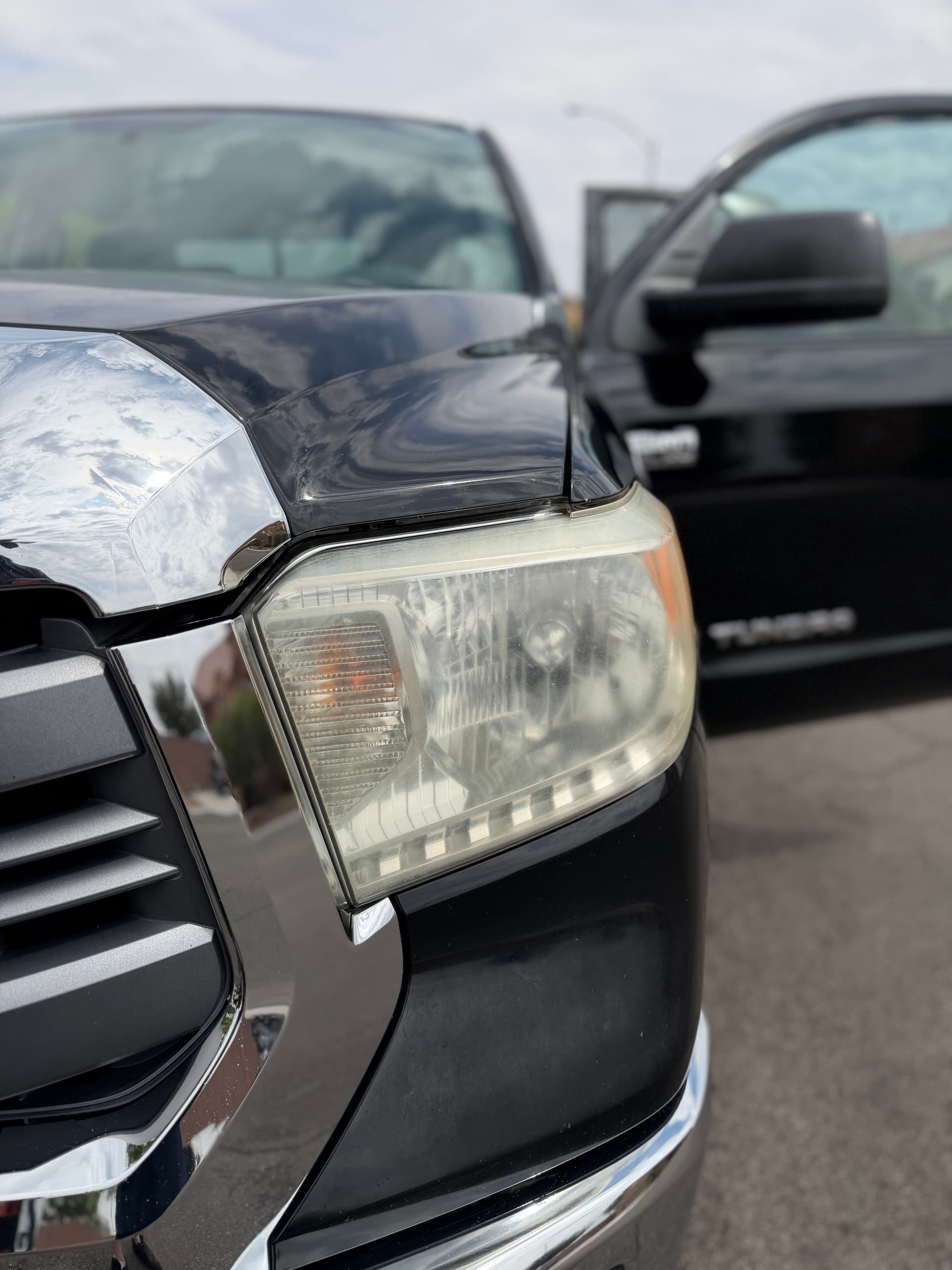
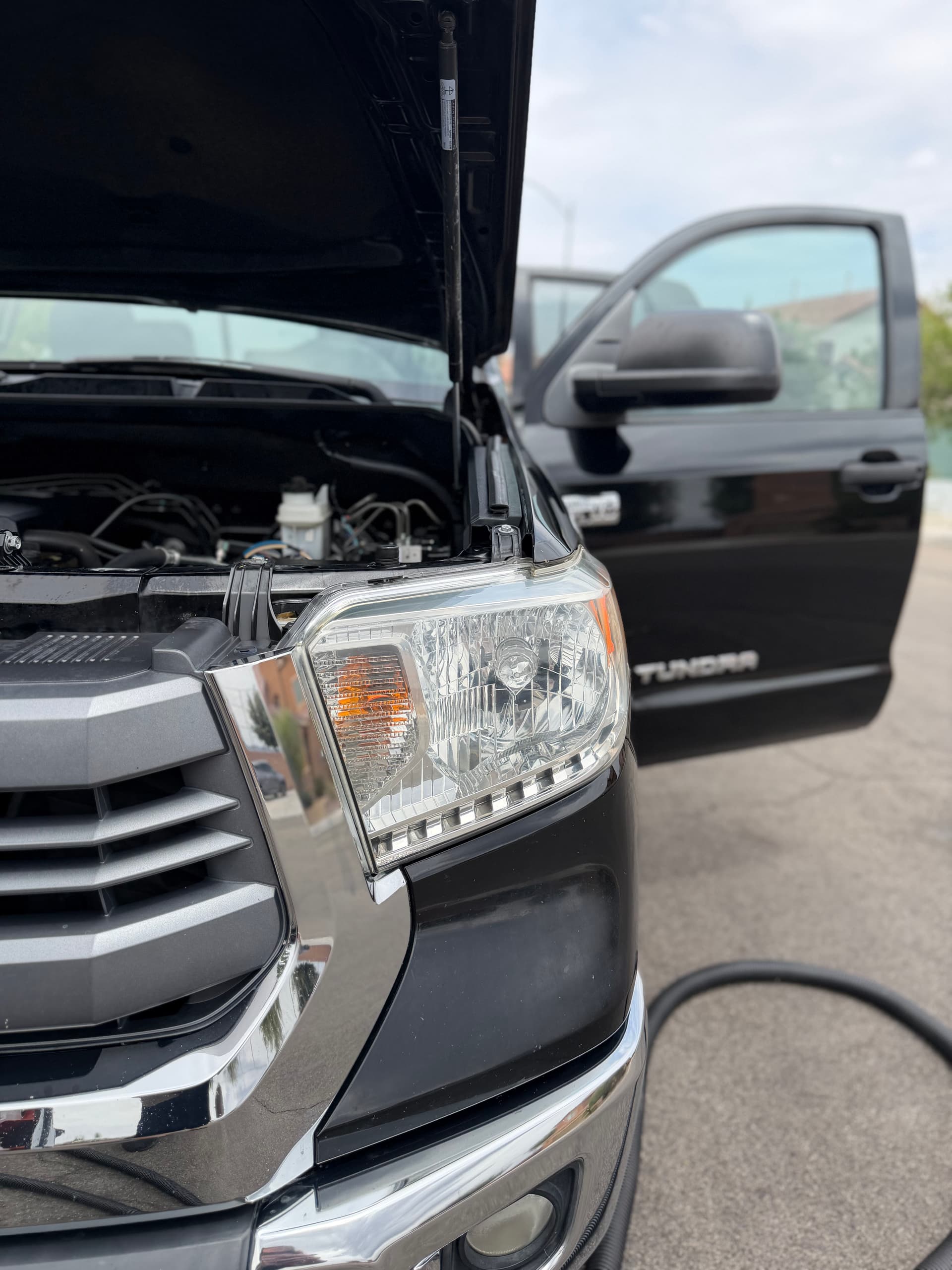
Most people notice hazy headlights and think it's just a cosmetic thing. It's not. That milky, oxidized film on your lenses is actually scattering your light output - meaning less of it hits the road where you need it. Driving at night with headlights like that puts you at a real disadvantage.
Here's what we were working with on this Toyota Tundra. The lenses had that heavy, washed-out haze that builds up over time from UV exposure and road wear. You can see just how far gone they were before we started. The internal reflectors were being completely muted by the oxidation on the outer lens.
A proper headlight restoration goes beyond just buffing the surface. We work through a multi-stage wet sanding process to remove the oxidized layer, then polish the lens back to clarity, and finish with a UV sealant to protect it going forward. The difference in light output after a restoration like this is noticeable the first time you drive after dark.
We also took care of the engine bay on this Tundra while we had it. An engine bay detail is one of those things that gets overlooked, but it matters - especially if you're doing regular maintenance checks or planning to sell the truck down the road. A clean bay makes everything easier to work on and just shows the truck has been taken care of.
If your lights are starting to look anything like the before on this one, don't wait on it. It only gets harder to restore the longer the oxidation sits, and your visibility at night takes the hit in the meantime.